


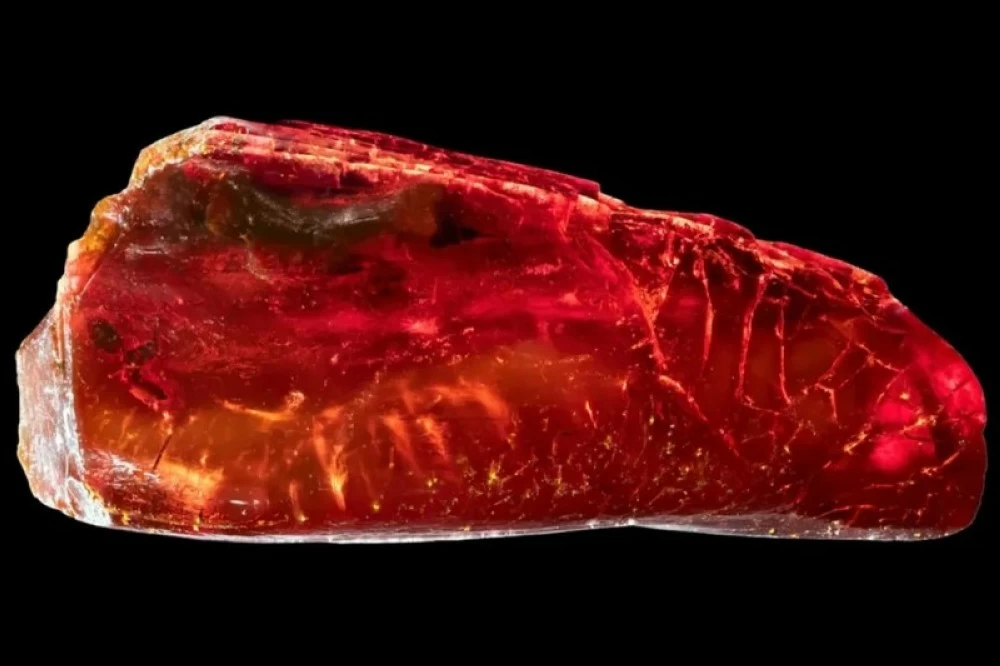
Researchers were able to discover a piece of rare amber dating back about 40 million years. It contains extremely precise preservations of extinct ants, fungal mosquitoes and blackflies, making it one of the most precise fossil discoveries ever known. The Sun reports that the specimen is the best-known example of the extinct species Ctenoberus gepertii.
The near-perfect state of preservation gave scientists an unprecedented opportunity to examine the internal structure of the ant’s head and body using three-dimensional imaging techniques, resulting in detailed images never before recorded in fossilized ants.
The significance of this discovery was further enhanced by the discovery that this amber fragment was in the personal collection of the famous German writer Johann Wolfgang von Goethe, who acquired approximately 40 pieces of amber. Today’s modern science and technology reveals biological treasures hidden for decades within this cultural heritage.
The study showed that the ant belonged to the “worker” category, shared many characteristics with modern ant species, and likely lived in warm pine forests. The shape of its powerful jaws indicates the ability to dig and peck through trees, which reveals its behavior and the nature of its environment millions of years ago.
In one of the most precise fossil finds ever known, researchers have uncovered a rare piece of amber from around 40 million years old that contains an extremely well-preserved extinct ant, along with the fungi mosquito and blackfly. According to the newspaper The Sun, this specimen is considered the best-known example of the extinct species Ctenoberus gepertii.
The near-perfect state of preservation gave scientists an unprecedented opportunity to examine the internal structure of the ant’s head and body using 3D imaging techniques, resulting in detailed images never before recorded for fossilized ants.
The discovery becomes even more important when it is revealed that this amber fragment was part of the personal collection of the famous German author Johann Wolfgang von Goethe, who owned about 40 pieces of amber, allowing modern technology to uncover biological treasures that had remained hidden for decades within this cultural heritage site.
The study shows that the ant belongs to the category of “workers” and shares many characteristics with modern ant species, suggesting that it lived in warm pine forests. Additionally, its powerful jaw shape indicates the ability to burrow and gnaw into trees, revealing its behavior and the nature of its environment millions of years ago.
