

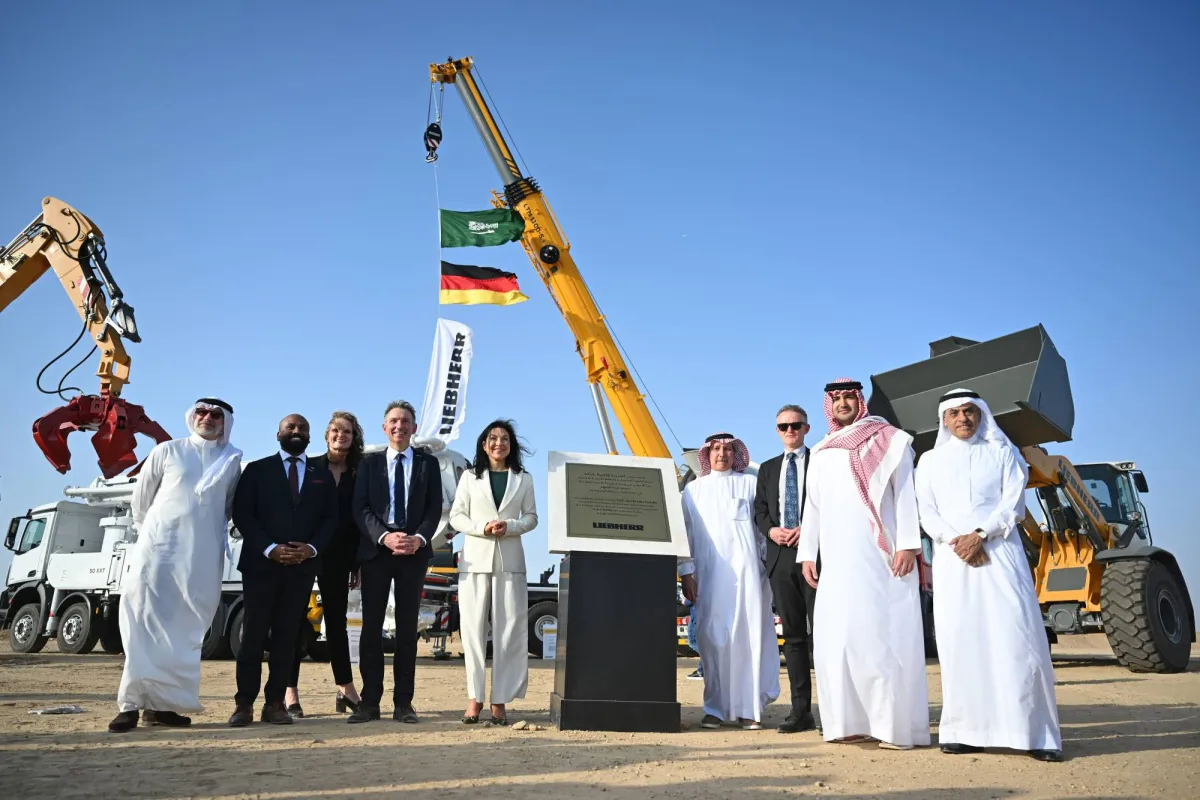
German Chancellor Friedrich Merz will travel to Saudi Arabia on Wednesday for his first official visit and meet with Crown Prince and Prime Minister Mohammed bin Salman, as Germany seeks to strengthen its strategic partnership with Saudi Arabia. He will accompany a large delegation of German business leaders to Riyadh.
Germany wants to strengthen its strategic partnership with Saudi Arabia, which it considers an influential regional power. Berlin aims to “expand bilateral strategic relations and deepen strategic dialogue” with Riyadh, a German government official said.
Sources said the meeting in the Saudi capital will also focus on military defense cooperation following Germany’s revision of rules on arms exports to Saudi Arabia and the lifting of previous restrictions.
Among the topics Mertz is expected to address in Riyadh is how they can work together to reduce tensions in the region with Iran. Germany has called on Iranian authorities to end what it calls an unjust crackdown on protesters and called on Iran to enter emergency diplomatic talks to halt its military nuclear program.
A German government spokesperson said Saudi Arabia “plays an important role in regional stability and security,” adding that this is the main reason Germany is keen to cooperate with Saudi Arabia on regional policy issues.
Berlin also aims to diversify its energy supplies and wants to conclude several economic agreements with Saudi Arabia, particularly in the energy sector.
Germany has become heavily dependent on the United States as its main source of liquefied natural gas since gas imports from Russia were suspended due to the Ukraine war. As its relationship with the United States changes, Germany is seeking to develop a long-term, more diversified economic strategy.
Germany is particularly interested in reaching an agreement with Saudi Arabia on green hydrogen.
Several German officials have visited Saudi Arabia in recent days, and recently Minister of Economy and Energy Katerina Reich signed an agreement with Saudi Energy Minister Prince Abdulaziz bin Salman to strengthen cooperation in the field of green energy.
Speaking in Riyadh, Reich said the agreement covers vital future-oriented areas such as energy, artificial intelligence, hydrogen, industrial value chains and innovation.
Under the agreement, shipments of ammonia will be routed from Saudi Arabia’s Red Sea port Yanbu to Germany’s Rostock port. The German government is under pressure to integrate hydrogen into its national strategy and deliver concrete results, but so far progress has fallen short of targets.
Germany believes that Saudi Arabia can play a central role in this field thanks to its favorable environment for green hydrogen production. German companies are already playing a key role in the kingdom’s hydrogen energy projects.
Thyssenkrupp Nucera, for example, is building what is said to be the world’s largest hydrogen electrolyser. Some German industries are relying on climate-neutral hydrogen to shift production processes that currently rely on fossil fuels.
According to the Saudi Press Agency, Reich also participated in the 21st meeting of the Saudi-German Joint Committee for Economic and Technical Cooperation, where they discussed ways to strengthen cooperation in energy, industry and investment, as well as opportunities in renewable energy, hydrogen, technology and healthcare.
The Saudi-German Business Council met on Monday and signed a memorandum of understanding to establish a general framework for cooperation across various energy sectors.
Several other agreements and memorandums of understanding were signed between public and private institutions of the two countries, underscoring the strength of bilateral economic relations and emphasizing the role of the private sector in supporting joint cooperation.
